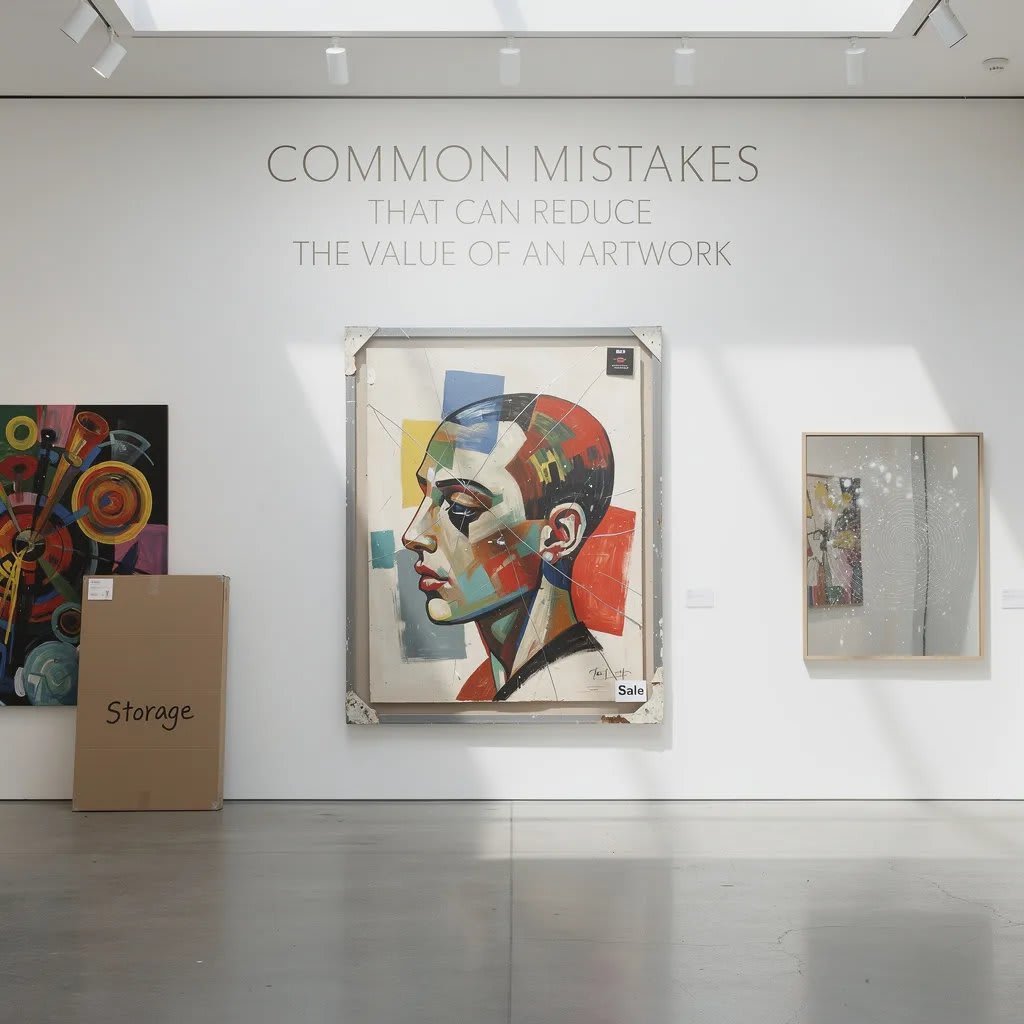
Artworks are treasures that demand respect and careful handling; neglecting their preservation can lead to significant financial losses and diminished artistic value.
Five Common Mistakes That Can Reduce the Value of an Artwork
An artwork is not merely a decorative object; it is a cultural asset—often unique, sometimes rare, and always fragile. Beyond its aesthetic and emotional value, an artwork can also represent a significant financial asset. Yet, many works lose a substantial portion of their value not due to a lack of authenticity or artistic merit, but rather due to mishandling, poor preservation, or alterations over time.
Consider the consequences of routine actions: a painting hung above a radiator, a print stored in a damp basement, or a sculpture cleaned with household products. These seemingly innocent actions can inflict irreversible damage. Thus, prior to any appraisal or art auction, it is essential to understand the common mistakes that can harm an artwork's value and learn how to avoid them.
1. Cleaning an Artwork Yourself
Many owners mistakenly believe they enhance an artwork by “refreshing” it before an appraisal or sale. However, cleaning an artwork at home—using water, detergents, alcohol, wipes, or general household products—can cause irreversible harm.
Why This Reduces Value
Artworks are composed of sensitive materials: fragile pigments, aged varnishes, paper, canvas, or wood that may have evolved over decades or centuries. Even gentle cleaning can disrupt surfaces, dissolve pigments, affect the varnish, or leave residues that are difficult to correct. In some instances, cleaning removes the natural patina, an essential element of authenticity for experts and collectors.
Impact on Value
Collectors and specialists may consider the artwork altered, consequently resulting in a significant loss of market value.
2. Undertaking Non-Professional Restoration
A poorly executed restoration can transform an authentic artwork into an object perceived as “retouched” or compromised, rendering it less desirable on the art market.
Why This Reduces Value
Amateur restorations often involve unsuitable materials or visible retouching. These interventions can distort the artist’s original intent, mask authentic details, or create inconsistencies that are readily apparent to professionals. In the art market, restoration should be discreet, reversible, and executed by qualified conservators.
Impact on Value
At auction, visible or inappropriate restoration can lead to a lower estimate, reduced bidder interest, or even withdrawal from sale if the work is deemed too problematic.
3. Discarding the Original Frame
Frames are sometimes removed or discarded because they appear outdated, damaged, or stylistically unfashionable.
Why This Reduces Value
An original or period frame is often an integral aspect of an artwork’s history. It may be contemporaneous with the work, crafted using traditional techniques, and sometimes holds intrinsic value. Removing it can diminish the artwork’s authenticity and visual coherence.
Impact on Value
Losing the original frame may reduce the overall appeal, credibility, and market value of the artwork.
4. Poor Storage and Display Conditions
Improper storage or display can lead to gradual deterioration that may not be immediately visible but is quickly identified by professionals.
Why This Reduces Value
Direct sunlight can fade colors, particularly in works on paper. Humidity can lead to mold, stains, warping, or canvas deformation. Heat and temperature fluctuations may cause cracking, paint lifting, or structural instability. While these issues may seem trivial to the untrained eye, they are immediately evident to specialists and negatively affect an artwork’s condition and desirability.
Impact on Value
The artwork becomes more fragile, less visually appealing, and less stable, leading to a direct decrease in value.
5. Losing Provenance and Documentation
Even a visually striking artwork can raise doubts if it lacks proper documentation.
Why This Reduces Value
The art market is built on trust. Provenance documents—such as invoices, certificates of authenticity, gallery records, exhibition histories, or previous auction results—help establish authenticity and credibility. Without documentation, buyers may question the artwork’s origin, condition, or legitimacy.
Impact on Value
Lack of provenance creates uncertainty, discouraging bidders and resulting in lower prices at auction.
LLB Auction’s Advice for Preserving the Value of Your Artwork
At LLB Auction, we regularly assist private owners who possess artworks without fully appreciating their significance or market potential. Our primary advice is straightforward: when an artwork appears old, rare, or potentially valuable, embrace a cautious and professional approach.
A professional appraisal is crucial—not only to ascertain value but also to prevent decisions that could inadvertently diminish it. Ensuring proper conservation conditions, stable environments, and careful handling is essential to maintaining an artwork’s appeal in the auction market.
Equally important is the need to preserve all documentation that helps tell the artwork’s narrative. Provenance, certificates, correspondence, and historical records play a decisive role in reassuring collectors and enhancing value at auction.
When the time comes to sell, expert guidance is vital. Selecting the opportune moment, presentation, and sales strategy can significantly influence results. LLB Auction supports sellers at every stage—from evaluation and catalog presentation to auction strategy and final sale—ensuring transparency, confidence, and optimal results.
Preserving an Artwork Means Preserving Its Value
In the art market, an artwork’s value depends as much on its condition, authenticity, and history as on its visual appeal. Even rare or emotionally significant works can suffer substantially if mishandled or poorly preserved.
The best advice before any appraisal or art auction remains simple: do not act hastily. Avoid risky interventions and seek professional advice to protect the integrity of the artwork and maximize its potential in the auction market.
👉 Do you believe you may own an artwork of value?
A professional appraisal can help you ascertain its true worth and prevent mistakes that could diminish it.
👉 Discover upcoming LLB Auction sales and benefit from expert guidance, clear guarantees, and a transparent auction process—allowing you to sell or collect with confidence.
Thank you for being part of the LLB Auction community.
The LLB Auction Team