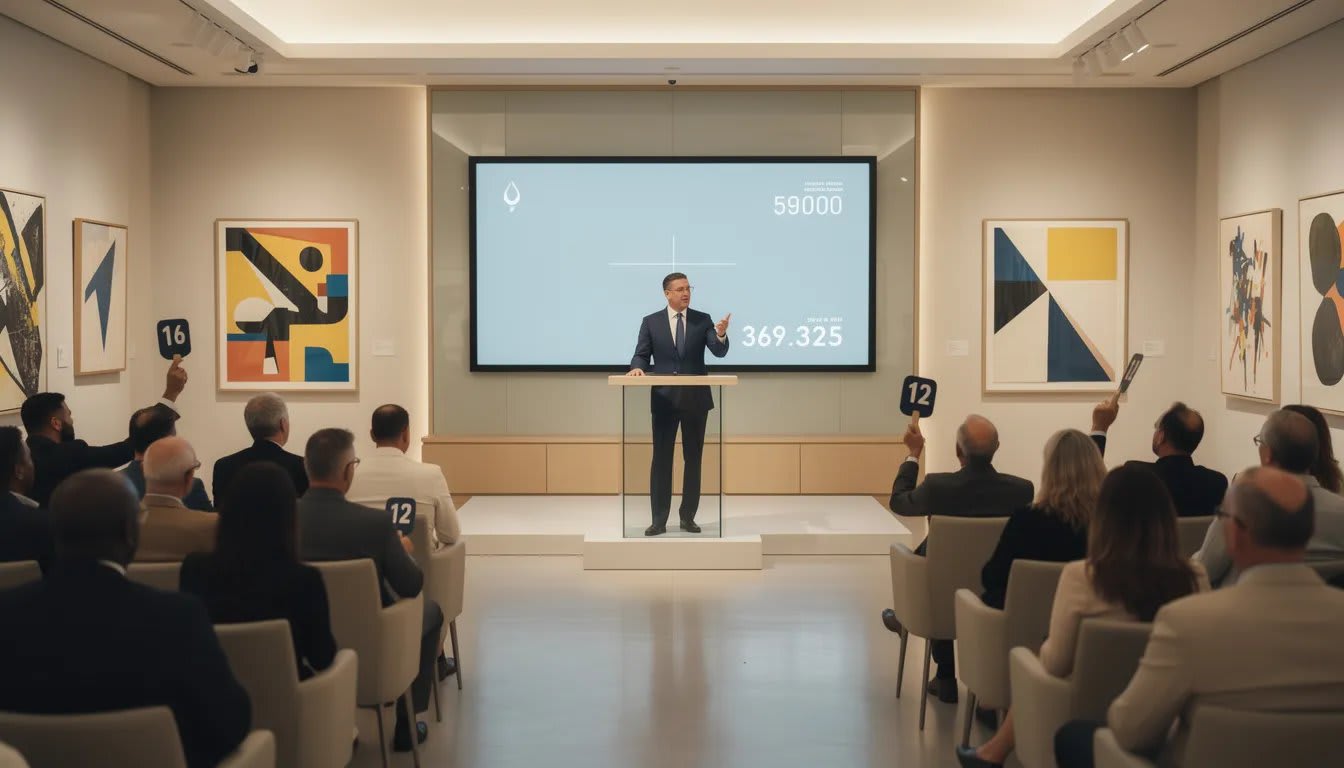
Navigating the world of art auctions requires understanding the hidden costs that can significantly influence your spending power, particularly the buyer's premium.
Buying Art at Auction: A Transparent Process
Acquiring art at auction is one of the most transparent and efficient ways to build a contemporary collection. Auctions provide public pricing, facilitate access to prominent and emerging artists, and offer unique opportunities to discover new talent.
Yet, one salient question resonates with collectors across all levels: What is the real cost of purchasing art at auction? Grasping the intricacies of auction fees is critical, not only for accurate budgeting but also for comparing auction houses and refining acquisition strategies.
Why Do Auction Fees Exist?
Auction fees play a vital role in maintaining the professionalism that underpins secure and transparent transactions. They encompass essential services such as:
- expert evaluation and authentication
- catalog production and thorough documentation
- marketing initiatives and global visibility
- sale organization and execution
- digital bidding platforms and livestreaming
- buyer and seller support both before and after the auction
Through these services, auction houses foster credibility, instill market confidence, and ensure seamless transactions — foundational pillars of the art market.
The Hammer Price: Only the Starting Point
The hammer price marks the final bid announced by the auctioneer upon the sale of a lot. This figure reflects the competitive bidding process; however, it does not equate to the total amount the buyer is obligated to pay.
In addition to the hammer price, buyers will be required to account for:
- the buyer’s premium
- applicable taxes (e.g., VAT)
- potential additional costs such as shipping and resale rights
The Buyer’s Premium Explained
What Is the Buyer’s Premium?
The buyer’s premium constitutes a commission payable by the buyer to the auction house. This expense is calculated as a percentage of the hammer price and often represents the primary auction-related cost for collectors.
This percentage varies considerably among auction houses and directly influences the ultimate purchase price.
Why a 20% Buyer’s Premium Is a Real Advantage
In the contemporary art market, many major auction houses impose buyer’s premiums ranging from 25% to 27%, frequently employing complex tiered structures.
At LLB Auction, we maintain a transparent and competitive buyer’s premium of 20%.
What This Means for Collectors
- Lower total acquisition costs
- Greater bidding flexibility within set budgets
- Better value per artwork
- Simpler and more predictable pricing
For collectors accustomed to regular purchases, this advantageous difference can represent substantial savings over time, all without compromising on expertise or quality.
A Concrete Cost Comparison
Let us consider two scenarios for the acquisition of the same artwork:
Auction House with 25% Buyer’s Premium
- Hammer price: €10,000
- Buyer’s premium (25%): €2,500
- Total (before taxes): €12,500
LLB Auction (20% Buyer’s Premium)
- Hammer price: €10,000
- Buyer’s premium (20%): €2,000
- Total (before taxes): €12,000
A €500 difference for a singular lot - a significant advantage, particularly in the context of collection-building.
Taxes and VAT: What to Expect
Depending on jurisdiction, the nature of the artwork, and the buyer’s status, certain taxes may apply:
- VAT on the buyer’s premium
- VAT on the artwork itself in specific instances
- Regulations pertaining to imports and exports
These rules vary by location. LLB Auction is committed to clearly communicating all relevant tax information, empowering collectors to plan their purchases with confidence.
Artist Resale Right (Droit de Suite)
Some contemporary artworks are subject to the Artist Resale Right, a legally mandated royalty designated for the artist or their heirs when an artwork is resold.
This applies when:
- the artist is alive or deceased less than 70 years ago
- the sale price surpasses a defined threshold
- the transaction occurs within jurisdictions enforcing this regulation
The resale right is capped by law and is always disclosed when applicable.
Additional Costs to Consider
Collectors should also anticipate the possibility of ancillary costs beyond auction fees, such as:
- professional packing and shipping
- insurance coverage
- customs duties for international acquisitions
While these elements are not specific to LLB Auction, they must be factored into any comprehensive acquisition budget.
A Collector-Focused Pricing Model
By offering a flat 20% buyer’s premium, LLB Auction embraces a model centered on:
- cost transparency
- equity among buyers
- accessibility for novice collectors
- durable relationships with seasoned collectors
This framework allows buyers to concentrate on what genuinely matters: artistic quality, coherent curation, and long-term vision.
Common Misconceptions About Auction Fees
❌ “Auction fees are excessive”
This assertion is not universally true. The key lies in comprehending the structure and selecting auction houses with competitive, transparent pricing.
❌ “Auctions cater only to experts”
Modern auctions are accessible, educational, and inviting for collectors at any level.
❌ “Galleries are always cheaper”
The transparency of auctions, combined with controlled fees, frequently offers superior market value.
Why Buy Through LLB Auction
Collectors favor LLB Auction for:
- a competitive 20% buyer's premium
- clear and transparent fee policies
- curated selections of contemporary art
- strong support for emerging artists
- seamless online access
This environment cultivates trust and encourages informed, confident art collecting.
Conclusion: Transparency as a Strategic Advantage
A thorough understanding of auction fees is fundamental to intelligent art collecting. However, selecting an auction house that offers a clear, competitive pricing structure is equally important.
Ultimately, a 20% buyer’s premium transcends mere numbers; it serves as a strategic advantage enabling collectors to optimize their budgets, enhance their bidding power, and build richer collections over time.
Frequently Asked Questions
Why should collectors compare buyer’s premiums?
Because even small percentage differences significantly impact total costs.
Does a lower buyer’s premium indicate lower quality?
No. It reflects a business model choice and does not compromise on expertise or curation.
Does LLB Auction support first-time buyers?
Indeed. LLB Auction provides guidance to collectors throughout the auction process.
Thank you for being part of the LLB Auction community.
The LLB Auction Team