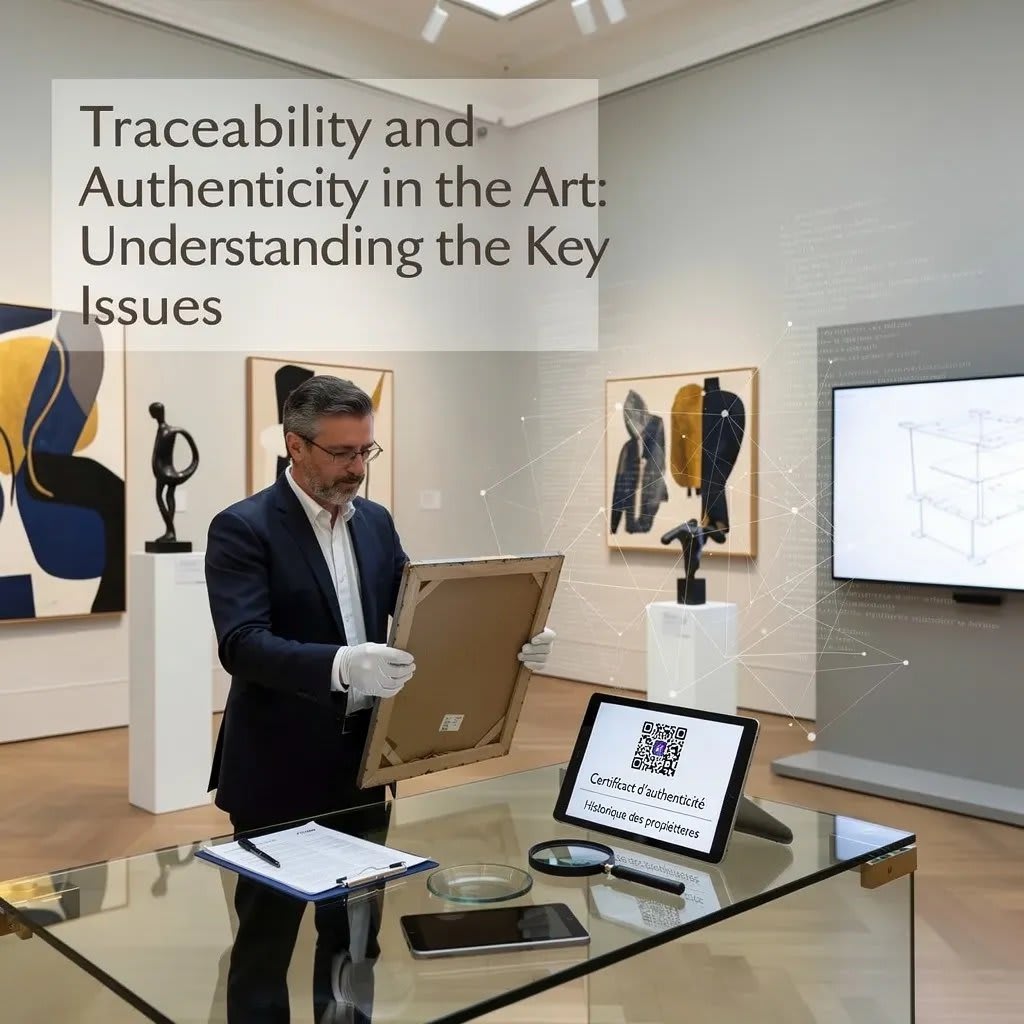
In a dynamic global art market, ensuring the traceability and authenticity of artworks is paramount for collectors and professionals alike, heralding a new era of trust and security.
Traceability and Authenticity of Artworks: Key Challenges in the Art Market
In an increasingly globalised art market, the traceability and authenticity of artworks have become central concerns. Collectors, sellers and art market professionals now pay close attention to provenance, ownership history, authentication certificates and the guarantees accompanying each transaction.
These elements are essential to securing art auctions, strengthening buyer confidence and preserving the long-term value of artworks.
Why Provenance Is Essential in the Art Market
Provenance allows the history of an artwork to be traced from the artist’s studio to its sale. It is one of the key criteria used when acquiring an artwork.
A clear and well-documented provenance plays a decisive role in the authentication of artworks. The risk of acquiring a forgery remains a major concern for collectors, and an established origin significantly reduces this risk.
Provenance can also have a direct impact on an artwork’s value. Works that have been exhibited in recognised galleries, included in major exhibitions or held in prestigious collections often command higher prices on the art market.
In addition, provenance ensures legal and ethical traceability, helping to confirm that an artwork has not been acquired or transferred illegally. A reliable provenance facilitates resale, particularly at auction, where transparency is a fundamental factor of trust.
Contrary to common belief, provenance is just as important in contemporary art. Even for living artists, provenance confirms authenticity, secures the purchase and contributes to the artwork’s recognition and future valuation.
Certificate of Authenticity: Role, Issuance and Responsibility
The certificate of authenticity is a fundamental document in the art market. It certifies that the artwork was created by the artist to whom it is attributed and confirms its origin. It is often essential for an art auction, resale or insurance purposes.
A certificate of authenticity may be issued by:
the artist themselves or their heirs,
a licensed auctioneer,
an art gallery,
an art dealer or qualified art market professional (expert, historian, specialist).
There is no single legally prescribed format for a certificate of authenticity. However, issuing such a document entails legal responsibility for the individual or entity providing it, requiring a high level of accuracy and diligence.
To ensure reliability, a certificate typically includes the artist’s name, the title of the artwork, its dimensions, medium, technique, year of creation, the location of the signature and a photograph of the artwork. For editions, the total number of copies is also generally specified.
The Role of Technology in Artwork Traceability
In response to growing demands for provenance, authenticity and transparency, digital technologies have become essential tools for securing and documenting the lifecycle of artworks.
The transportation of artworks presents a major challenge, requiring high standards of security and precision. Geolocation systems now allow real-time tracking of artworks in transit, providing visibility at every stage of transport.
RFID technologies further enhance traceability. By integrating RFID tags, each movement of an artwork—storage, transport or delivery—can be accurately recorded, reducing the risk of loss and improving inventory management.
Security is reinforced through the use of smart sensors capable of detecting temperature changes, shocks, vibrations or unauthorised openings. In the event of an anomaly, immediate alerts enable swift and effective intervention.
Blockchain technology is also emerging as an innovative solution, enabling the creation of tamper-proof records that document an artwork’s provenance, authenticity and full transaction history with a high degree of transparency.
The Role of Auction Houses
At LLB Auction, we play a central role in ensuring the traceability, authentication and security of artworks offered in each art auction.
As an auction house, we conduct rigorous artwork expertise to verify provenance, condition and market coherence. Each lot is accompanied by detailed documentation, certificates where required, and thorough legal checks.
This approach secures transactions, reinforces collector confidence and ensures a high level of transparency, particularly within the contemporary art market, where authenticity and traceability are essential factors in artwork valuation.
Conclusion
Traceability and authenticity are now major challenges in the global art market. Whether through provenance or certificates of authenticity, these elements are essential for securing transactions, reassuring buyers and preserving the long-term value of artworks.
In an increasingly international market exposed to the risks of forgery, access to reliable, well-documented and verified information has become indispensable for both collectors and professionals. Ensuring rigorous traceability and solid authentication safeguards trust, transparency and the long-term sustainability of the art market.
Thank you for being part of the LLB Auction community.
The LLB Auction Team