In this article
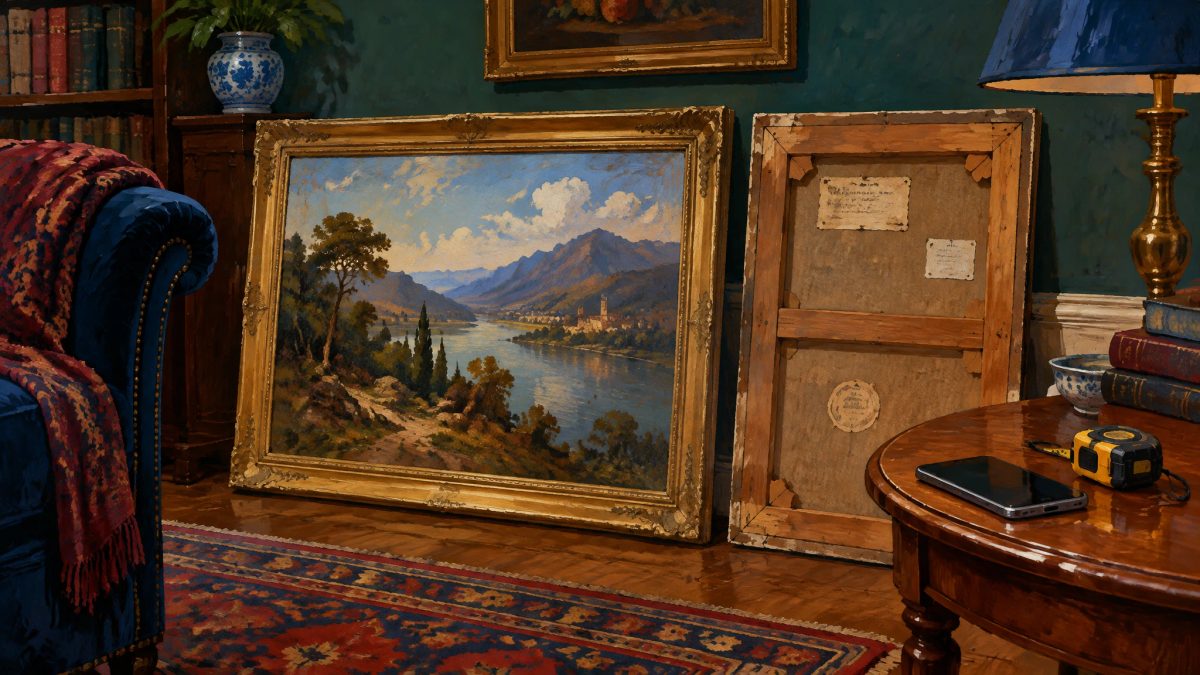
You own a framed oil, signed by a painter whose name you half recognise, and you want a figure before you decide whether to sell it. Finding out through a paid valuer costs you from £145 per painting in the United Kingdom, and £195 an hour when the valuer comes to your home. If your question is simply "what is my painting worth", and a sale is one of your options, a free auction estimate answers it at no cost to you. An estimate is the low and high figure a specialist expects your painting to fetch at auction. LLB Auction gives you one from photographs: you send four pictures and the dimensions through the free valuation form, which takes about ten minutes of your time, and Lyna Brahami, Associate Specialist, replies within 48 working hours.
Key points
- In 2025, half of all fine art lots sold at auction worldwide made less than $600, and 80% made less than $3,160.
- If you are considering a sale, ask for a free auction estimate; pay for a written valuation only when you need a figure for insurance or probate.
- Your next step: four photographs and the dimensions, about ten minutes, with a reply within 48 working hours.
A Free Estimate From Photos for Your Painting
You receive an auction estimate for your painting, written by a named specialist, with the reasoning behind the figure. Lyna Brahami reads your photographs, identifies the painter and the period where the signature and the back of the canvas allow it, and compares your work with recorded sales of the same hand. The estimate is free and confidential, and accepting it does not oblige you to sell. Should you decide to sell, the house takes the painting on consignment under a contract you agree before anything moves.
Free valuation from a photo
Send a photo. Lyna Brahami replies within 48 working hours, free and without commitment.
Drop your photos here
or
Prefer WhatsApp?
Send the photos on WhatsAppWrite to +352 661 225 970. The reply comes in the conversation.
What Is My Painting Worth at Auction: the Price Brackets
Your painting sits in one of four brackets, and the table shows how auction results spread across them. The hammer price is the final bid accepted by the auctioneer, before the buyer's premium and VAT.
| Hammer price bracket | Share of fine art lots sold at auction | What your painting needs to reach it |
|---|---|---|
| Under $600 | 50% of lots in 2025 | A decorative or unsigned work with no recorded sales |
| $600 to $3,160 | 30% of lots in 2025 | A legible signature and a painter with a few auction records |
| $3,160 to $50,000 | about 15% of lots | A listed painter with a regular market, good condition, a strong subject |
| Over $50,000 | 5% of lots in 2024 | A recognised name, a documented provenance, a major work |
Decision: You own a signed oil and do not know whether it is worth £300 or £30,000. Paying a valuer to find out costs you from £145 per painting, or £195 an hour for a home visit. Three routes are open to you: a free auction estimate if you are considering a sale, a paid written valuation if you need a figure for your insurer or for probate, or no action if the painting stays on your wall. Your purpose decides between them. If a sale is possible, send your four photographs and the dimensions through the valuation form, about ten minutes.
What Is My Painting Worth to You: Sell, Insure or Keep
Your reason for asking sets the kind of figure you need. A sale calls for an auction estimate, which predicts what buyers will pay. Your insurer asks for a replacement value, which reflects what a dealer would charge you to buy a comparable work, and that figure runs higher than an auction estimate. If you need a written document for an insurer or an estate, a paid valuation is the right purchase; for every other case, the free estimate gives you the figure you need to decide.
The details that move your estimate
Eight criteria move the price of your painting: attribution, signature, technique and support, size, subject, period, condition and provenance. A signed oil on canvas by a recorded painter sells above the same subject unsigned, and a canvas with flaking paint or a tear sells below the same work in good condition. Provenance, the documented chain of owners, adds value when you hold a receipt, an exhibition label or an earlier auction catalogue.
The four photographs to send
Your photographs carry most of the identification work, so take them in daylight, without flash, with the frame on.
- The whole front of the painting, square on.
- The signature, close up and sharp.
- The whole back, which shows the stretcher (the wooden frame the canvas is pulled over) and the canvas.
- Every label, stamp or inscription on the back, including a canvas maker's stamp, which helps date the canvas.
Add the height and width of the canvas in centimetres or inches, without the frame. If you have an invoice, a letter or an old catalogue, photograph it too.
Is a Modest Painting Worth Sending In?
Your painting does not need to be valuable for an auction house to look at it. In 2025, 173,280 paintings sold at auction worldwide for less than $1,000 each, and the median fine art lot made $600. In 2024, 95% of lots sold at auction made less than $50,000. LLB Auction accepts every category for valuation, from old and modern paintings to works on paper, so your request reaches the specialist whatever its expected value. When the estimate shows that a sale makes little sense for you, you keep the painting along with a written figure that cost you nothing.
How LLB Auction Values and Sells Your Painting
You deal with one house from your first photograph to your payment. Here is what you receive.
- The deliverable: a written auction estimate for your painting, with the reasoning behind it.
- The delay: Lyna Brahami replies within 48 working hours.
- The cost to you: nothing for the estimate. If you consign, the seller's commission and the reserve, the minimum price below which your painting does not sell, are agreed with you in the consignment contract before the sale.
- The proof: the house publishes the result of every sale since its first, lot by lot with each hammer price, on its auction results page.
When you consign, the specialist examines your painting in person before the sale, the house photographs, researches and catalogues it, sells it online on llb-auction.com with a listing on Interenchères, collects payment from the buyer and settles you with a statement. For a collection of several paintings, a home visit is arranged. If you prefer to talk first, you can reach the house by phone or WhatsApp.
FAQ
What is my painting worth if the signature is illegible?
An illegible signature lowers the estimate unless other evidence identifies the painter. Labels on the stretcher, a gallery stamp, an exhibition sticker or a canvas maker's stamp help the specialist attribute and date the work. Send close photographs of the signature and of every mark on the back. Lyna Brahami states in the estimate whether the painting is attributed to a named painter, given to a school or a period, or left unattributed, and the price bracket follows that attribution.
Do I pay the artist's resale right when my painting sells?
The artist's resale right is a royalty owed to the painter, or their heirs for 70 years after death, each time a work resells through an art market professional. Directive 2001/84/EC sets the rate at 4% on the first €50,000 of the price, caps the royalty at €12,500 and places it on the seller, with each Member State free to share that liability with the auction house. It applies only above a minimum price, which no Member State may set above €3,000. Your consignment contract states the amount that applies to your painting.
Do I need an export licence to send my painting from the UK to Luxembourg?
An oil or tempera painting over 50 years old needs an individual UK export licence from Arts Council England when its value reaches £180,000. Below that value, the painting leaves the United Kingdom under the open general export licence, with no individual application. Once in the European Union, a painting over 50 years old that no longer belongs to its painter needs an EU export licence to leave the Union when its value reaches €150,000, under Council Regulation (EC) No 116/2009. Your estimate tells you which side of these thresholds your painting stands.
Can LLB Auction see my painting in person before the sale?
Yes. The specialist examines every painting in person before it goes to sale, after you have accepted the estimate and signed the consignment contract. The photo estimate gives you a figure to decide on; the examination confirms the attribution and the condition before the house catalogues the work. For a collection of several paintings, the house arranges a home visit. Contact the house on +352 661 225 970 to plan one.
Conclusion
Your next step takes about ten minutes: photograph the front, the signature, the back and its labels, note the dimensions, and send them through the valuation form. Lyna Brahami replies within 48 working hours with a free, confidential estimate, and you decide from there. That reply answers the question "what is my painting worth" with a figure you can act on.
Further reading:
- How a painting is valued and how an auction estimate is built
- Checking an estimate with comparable sales
- What provenance adds to the price of a painting
- An indicative estimate against a formal appraisal
- Reading the back of a painting: stretcher, nails and stamps
Sources:
- Artprice by Artmarket, The Art Market in 2025, 32nd Artprice Annual Report, 10 March 2026
- Art Basel, Unpacking the Art Market Report: Art Basel and UBS 2025, 2025
- Prestige Valuations, Fine Art and Antique Valuation, fees, consulted November 2026
- European Parliament and Council, Directive 2001/84/EC on the resale right for the benefit of the author of an original work of art, 27 September 2001
- Council of the European Union, Council Regulation (EC) No 116/2009 on the export of cultural goods, Annex I, 18 December 2008
- Arts Council England, UK Export Licensing for Cultural Goods, Guidance for exporters, Issue 2, 2021
Sell or buy with the house
Lyna Brahami values a work from your photos, free, within 48 working hours. The house then catalogues it, offers it in an online sale and settles you with a statement once the buyer has paid.

Associate Specialist


